

Fallen Angel Ontology and Fig Tree Anthropology versus Holy Angel Ontology and the Cruciform Tree of Life
By Apostle Brandon Barthrop
RLM TV Press www.RLM.TV
“The wisdom from above is first pure, then peaceable, gentle, open to reason, full of mercy and good fruits.” — James 3:17
“Solid food is for the mature, who by constant use have trained themselves to distinguish good from evil.” — Hebrews 5:14
Christian theology has long spoken about angels, demons, flesh, and spirit, yet it has rarely provided believers with a functional ontological framework by which to discern how different beings exist, how they operate, and how those modes of existence interact with human anthropology. As a result, many believers mistake light for holiness, power for God, and spiritual experience for divine origin.
This article proposes that true biblical wisdom—defined in Scripture as the ability to discern between good and evil—requires an ontological understanding of both angelic orders and human participation in them. Specifically, it argues that fallen angel ontology expresses itself through Fig Tree anthropology, while holy angel ontology aligns with the Cruciform Tree of Life anthropology revealed and fulfilled in Jesus Christ.

1. Wisdom as Ontological Discernment
In Scripture, wisdom (ḥokmah / sophia) is not merely moral insight or intellectual knowledge. Wisdom is the capacity to perceive the source and nature of a life-form, to know what kind of being one is encountering and what realm it belongs to.
This is why Hebrews defines maturity not as knowledge accumulation, but as trained perception (Hebrews 5:14). To discern light from darkness is not to judge appearances, but to recognize ontological signatures—how a life operates, what governs it, and what it produces.
2. Fallen Angel Ontology: Power without Union
Fallen angels are not defined in Scripture primarily by evil behavior, but by a severed ontological relationship. They possess:
- intelligence without obedience
- power without surrender
- light without life
Jesus describes Satan not merely as a liar, but as one who “did not stand in the truth” (John 8:44). Ontologically, fallen angels exist in a state of self-originated authority, cut off from the Throne yet still operating in the created order.
This mode of existence produces:
- domination rather than service
- illumination without transformation
- ascent without crucifixion

3. Fig Tree Anthropology: Human Participation in Fallen Angel Ontology
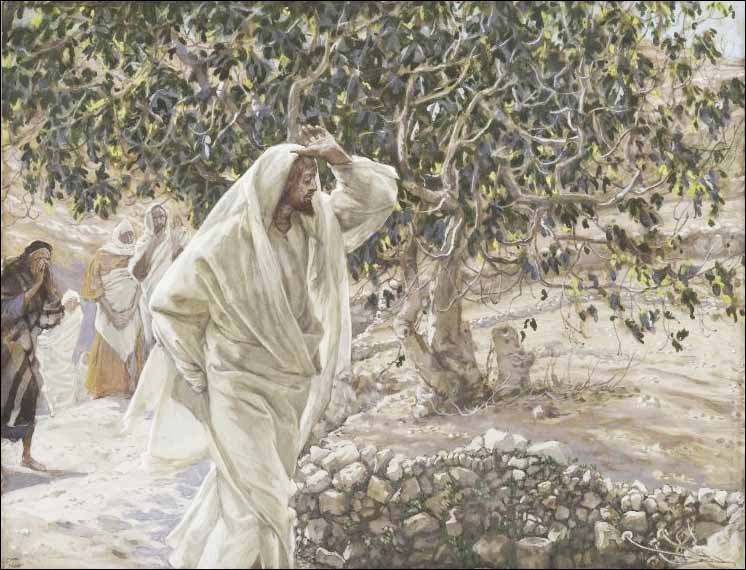
The Fig Tree represents humanity functioning independently of God, attempting to cover itself, define itself, and ascend by its own knowledge (Genesis 3:7). This anthropology mirrors fallen angel ontology.
Fig Tree anthropology is characterized by:
- self-awareness without union
- knowledge without obedience
- spirituality without death
This is why Jesus curses the Fig Tree (Matthew 21:19; Mark 11:12–14, 20–25). He is not rejecting Israel outright, nor knowledge itself, but an anthropological mode of existence that mirrors the rebellion of fallen angels—life operating apart from divine dependence, producing leaves (outward show) but no lasting fruit.
Under Fig Tree anthropology:
- the nefesh (soul) governs unchecked
- identity is self-constructed
- discernment becomes subjective
- light becomes deceptive
This is the soil in which false light thrives.

4. Holy Angel Ontology: Life in Alignment and Order
Holy angels, by contrast, are defined not by autonomy but by alignment. Scripture describes them as:
- “mighty ones who do His word” (Psalm 103:20)
- “ministering spirits sent forth” (Hebrews 1:14)
Their ontology is characterized by:
- obedience as existence
- authority flowing from submission
- light sustained by proximity to God
Holy angels do not ascend independently; they stand before the Throne. Their power is derivative, not self-generated.


5. The Cruciform Tree of Life Anthropology
The Cross reveals a new anthropology that does not imitate fallen angels nor merely coexist with holy angels, but surpasses both through union with God. As patristic tradition affirms (e.g., in Eastern Orthodoxy and early fathers like Ephrem the Syrian), the Tree of Life in Eden prefigures the Cross of Christ—the true source of eternal life, hidden until revealed on Golgotha.
The Tree of Life anthropology is cruciform:
- death before exaltation
- obedience before authority
- surrender before glory
Jesus Christ embodies this anthropology perfectly:
“Though He was in the form of God… He humbled Himself unto death, even death on a cross.” — Philippians 2:6–8
This is the precise opposite of fallen angel ontology. In Christ, humanity does not ascend to God by knowledge or power; God descends into humanity through sacrifice. This produces a mode of existence that holy angels serve and fallen angels cannot inhabit.
6. Why This Distinction Matters for the Church Today
Without ontological clarity:
- fallen angel light is mistaken for divine revelation
- spiritual power is mistaken for holiness
- charisma replaces crucifixion
- experience replaces obedience
With ontological clarity:
- believers discern spirits by their mode of being, not their claims
- humility is recognized as divine power
- the Cross becomes the test of all revelation
This is why Paul declares:
“Even Satan disguises himself as an angel of light.” — 2 Corinthians 11:14
Only cruciform ontology exposes counterfeit light.
7. Conclusion: Wisdom as Alignment with the Tree of Life
True wisdom is not choosing between good and evil actions, but between two modes of existence:
- the Fig Tree, which mirrors fallen angel autonomy
- the Tree of Life, which embodies cruciform union
Believers are not merely saved from sin; they are saved into a new ontology. Discernment, therefore, is not suspicion but recognition—the ability to identify what kind of life is operating and from which tree it draws sap.
To discern heaven from hell is to discern which tree a life is growing from.
This understanding restores wisdom to its biblical definition and equips the Church to walk in light without deception.
Published by RLM TV Press
Apostle Brandon Barthrop
